Bonus Recipe: Salmon with Cilantro-Lime Dressing
Cool & creamy cilantro-lime dressing, plus the best ways to cook salmon.
I serve salmon for dinner several times a month and I’m always looking for new salmon recipes. What I’ve learned, though, is that my kids don’t really like new salmon recipes (especially my 9 year old). They like plain salmon, with nothing on it. Which is fine, and actually makes my life easier, but sometimes I crave more flavor.
My solution is to serve salmon with a bold salad dressing on the side. The kids can eat plain salmon and the adults can pour on more flavor. It only takes a few minutes to make salad dressing and it can change the flavor of dinner completely.
This summer I’m all about cool and creamy cilantro-lime dressing. It’s zippy and zesty with a big kick of lime and fresh, citrusy cilantro flavor.
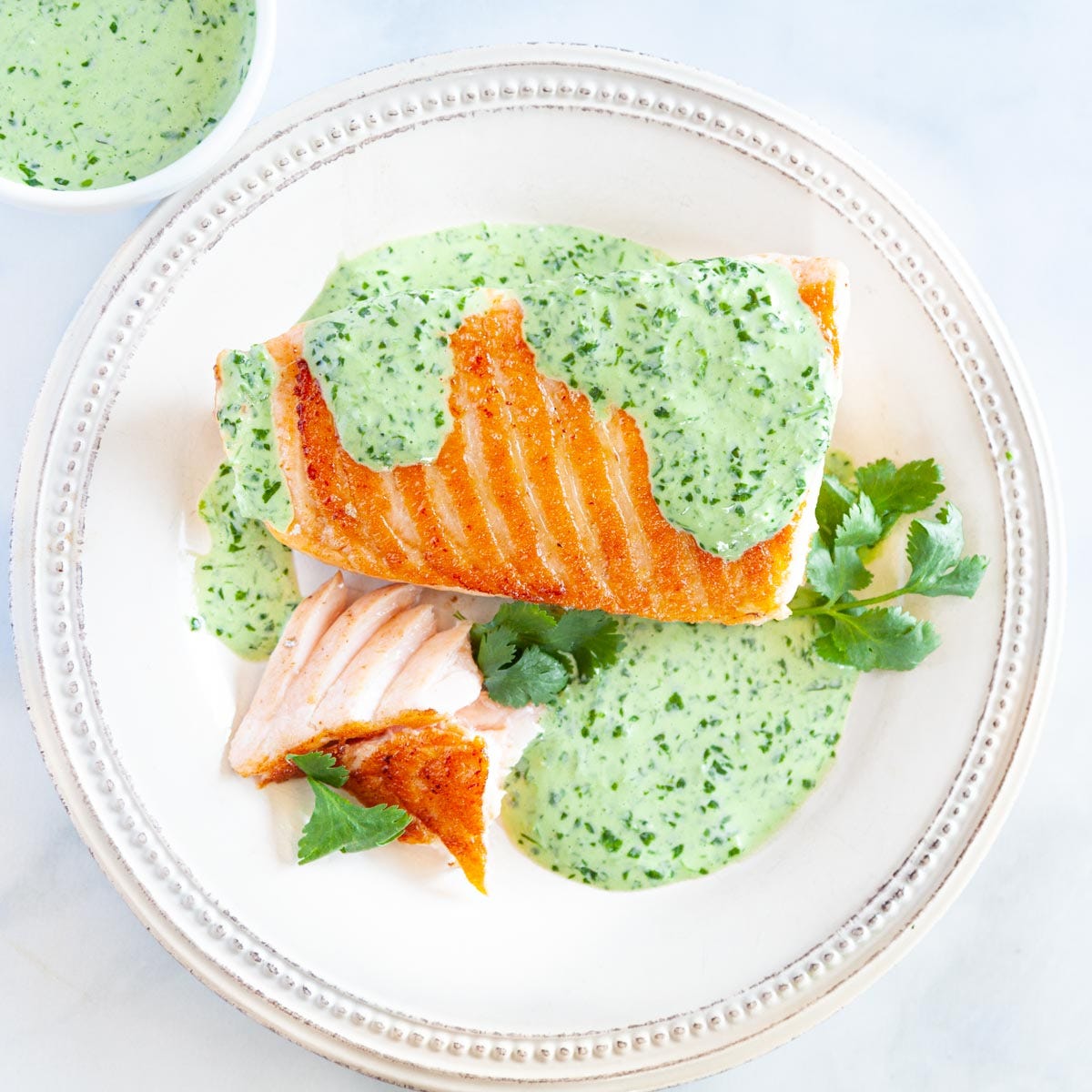
I’ve tried at least a half dozen different salmon dinner combinations with this dressing served on the side and they’ve all been really delicious. The great thing about salad dressing is that it’s not only for salad greens. You can pour this dressing over roasted vegetables, steamed potatoes, broccoli, rice or pasta. When I make this dressing, I pour it over the salmon and over all the side dishes on my plate.
Here are a few salmon dinner combinations that work really well with creamy cilantro-lime dressing served on the side:
Salmon and salad greens
Salmon and potatoes
Salmon with fresh corn and sliced cucumbers
Salmon with grilled zucchini
Salmon with orzo pasta (it’s really good with cold orzo, served as a chilled pasta salad with salmon flaked over the top)
Salmon tacos
Below, you’ll find the recipe for creamy cilantro dressing, plus cooking instructions for grilled salmon, baked salmon, and my very favorite, crispy pan-seared salmon.
Don’t forget, you can find a copy of this recipe and the entire collection of bonus recipes on my Substack recipe index page. Bookmark the page and think of the recipe index page as an online cookbook, just for you!
Salmon with Creamy Cilantro-Lime Dressing
Servings: 4 (if serving more than 4 people, consider doubling the dressing recipe)
Cooking Method: Blend the dressing in a food processor. Cook the salmon any way you like (instructions below).
Preparation Time: 15 minutes for the dressing, about 15 minutes to cook the salmon
A printable pdf of the recipe can be found at the bottom of the page.
Questions? If you have any questions about this recipe, don’t hesitate to ask in the comments.
Ingredients
½ cup plain, full-fat Greek yogurt
¼ cup mayonnaise
1 small bunch of cilantro (leaves and tender stems - see notes below)
2 green onions (the top green part only), torn or snipped into pieces
1 tablespoon + 1 teaspoon lime juice
1 small garlic clove
⅛ teaspoon salt, plus more to taste (I add just slightly less than ¼ teaspoon)
Instructions
In a medium bowl, set ¼ cup of Greek yogurt aside.
In a food processor, blend the remaining ¼ cup of Greek yogurt with the mayonnaise, cilantro, green onion, lime juice, garlic, and salt. Blend for about 2 minutes, until the cilantro is chopped as small as possible. You’ll have to stop a few times and scrape down the sides.
Pour the dressing into the bowl with the reserved ¼ cup of Greek yogurt. Use a spatula to scrape the sides and lid of the food processor, to get all of the dressing out.
Use a whisk to mix the dressing by hand until smooth. Refrigerate until needed.


Recipe Notes
Cilantro: I don’t measure an exact amount of cilantro. I also don’t take the time to pull off each tiny leaf. For this dressing, I take a smallish bunch of cilantro from the grocery store (or half of a large bunch) and chop off the stems right at the point where the stems start getting thicker and there are fewer leaves. The thinner, tender top stems that have leaves attached will blend up just fine in a food processor. The total amount of cilantro I put in the dressing is probably around 2 cups.
I usually throw the bottom stems in the compost, but maybe I should be doing more with them? (any ideas?)
Greek yogurt: Full-fat yogurt tastes better and has a creamier consistency. It’s all I buy, so I’ve never tested this recipe with non-fat yogurt. If you don’t have Greek yogurt I think regular plain, full-fat yogurt would probably work pretty well.
Food Processor vs Blender: You can use a blender instead of a food processor, but I find that it’s harder to scrape the dressing out of a narrow blender. If you use a blender, the dressing will have a smoother consistency with fewer little pieces of cilantro.
Whisk in the remaining 1/4 cup of yogurt: If you put all of the yogurt in the food processor or blender at once, the consistency of the dressing tends to be too runny. This is why I whisk in 1/4 cup of the yogurt by hand.
How to Cook Salmon
No matter how you cook salmon, start with these three steps:
Pat the fish dry: Use paper towels to pat both sides of the fillet to soak up excess moisture
Oil or butter: Brush both sides of the fillet with olive oil or melted butter (about 1 tablespoon per pound)
Season: You can use just salt and pepper or your favorite seasoning blend to season the salmon. I’m conservative with the amount of salt I use, because you can always taste the cooked fish and add more salt if needed. Keep in mind that if you’re also adding salted butter during the cooking process, you’ll need less salt for seasoning. I tend to use 1/8 to 1/4 teaspoon of table salt per pound (or 1/2 to 3/4 teaspoon kosher salt) and then add more to taste after the fish has been cooked.
Pan-Seared Salmon
My favorite way to cook salmon is pan-searing the fillets in a skillet. This method gives the salmon a crispy, outer layer and flakey interior. If you run the fan above your stove, your house will smell less fishy than if you bake the salmon. This method works best with 4 to 6 ounce fillets, rather than one large piece of salmon.
Turn on the fan over your stove.
Follow the three steps above: patting dry, oiling and seasoning the fish.
Heat a wide non-stick skillet over medium-high until very hot (about 2 minutes). It’s okay for the pan to be dry (not oiled) because you have already brushed the fish with oil or melted butter.
Add the salmon skin side down (skin touching the pan).
Cook for 3 minutes without moving the fish. Halfway through, turn the heat down to medium.
Flip the fillets, pushing the flesh down gently against the pan.
Cook for 4 minutes, turning the heat down to medium-low halfway through. Press the fish down with a spatula once or twice, so the flesh is pushed against the hot skillet.
Note: If the fillets are thin, you can cook the fish for less than 4 minutes here.
Add 1 tablespoon of salted butter to the skillet, swirling the skillet as it melts. Gently move the fish around so the butter gets onto and under the fillet.
Flip the fish again, so the skin is against the pan again. Make a thin slice into the middle to see if it’s cooked to your liking. If it is, take the fish out of the pan. If the middle is not cooked enough for you, turn off the heat, add a lid, and let the fish rest for another minute or two in the residual heat.
You can pour any butter left in the pan over the fish.


Grilled Salmon
I also love the crispy texture of grilled salmon, but I worry about it sticking to the grill. For this reason, I often grill salmon on a piece of foil even though it turns out slightly better if you put the salmon directly on the grill. You could also use a perforated grilling pan to keep the fish from sticking. If you’re putting the salmon directly on the grill, the grates need to be clean and brushed with oil, to help prevent the fish from sticking to the grates.
Heat the grill to medium-high.
Follow the three steps above: patting dry, oiling and seasoning the fish.
When the grill is hot, place the salmon skin-side down (skin touching the grill).
I usually end up cooking salmon for 10 to 12 minutes, total (lid open). If you like your salmon have a medium or medium-rare middle, cook it for a few minutes less.
Flipping the salmon halfway through is optional. Flipping the salmon gives it a smokier flavor and browned flesh, but there’s a greater risk that the fish will stick to the grill.
Baked Salmon
I usually bake salmon for convenience, whenever I want an easy, hands-off cooking method.
Heat oven to 375F.
Follow the three steps above: patting dry, oiling and seasoning the fish. I’m a little more generous with the oil or butter when I bake salmon, to keep it from getting dry.
Bake uncovered until it flakes easily, usually 12 to 15 minutes or a few minutes longer for thicker fillets. Or, you can bake the salmon for a few minute less then slide it under the broiler for a few minutes at the end to brown the top.
Low and Slow Method
For softer, silkier fish bake at 325F for closer to 20 to 25 minutes.
This is a bonus recipe for paid subscribers. You can find the entire collection of bonus recipes on my Substack recipe index page. Think of the recipe index page as an online cookbook, just for you!


